sauna · heat · sudden death
Sauna 4 to 7 times a week cut sudden cardiac deaths.
You wanted the heat you keep going back to, not one Sunday sweat.
A sauna is a hot dry room you sit in, and sudden cardiac death is when the heart stops without warning. Keep the sauna name.

What is a sauna?
This file used dry Finnish saunas at about 79 degrees Celsius, which is a very hot dry room. Those rooms had dry air, with humidity at 10 to 20 percent. Humidity is how much water is in the air. People in Finland often keep the heat at the face between 80 and 100 degrees Celsius, and you sit down in that room and come back.
An infrared sauna is a warmer room that uses light heat, not this file. You can still want a warm room.
What is sudden cardiac death?
Sudden cardiac death is when the heart stops without warning. That is the event the team counted. People keep going back to the heat because they want fewer of those deaths.
What did the 2015 Finnish sauna study find?
Kuopio is a Finnish town. Tanjaniina Laukkanen, Hassan Khan, Francesco Zaccardi, and Jari Laukkanen published this paper in 2015 in JAMA Internal Medicine, a medical journal, and they worked at the University of Eastern Finland in Kuopio. They posted the paper online on 23 February 2015. You can read it at doi.org/10.1001/jamainternmed.2014.8187.
They used men from the Kuopio Ischemic Heart Disease Risk Factor Study, a long study of heart risk in men from that town. The team invited 3433 men aged 42 to 60. 2682 men joined, which is 78.1 percent. 2327 men had full sauna answers, and they left out 12 men who never used a sauna, so they counted 2315 men.
They asked those men about sauna use from 1 March 1984 through 31 December 1989, then watched them through 2011 and did not lose anyone. Average watch time was 18.8 years, and the middle watch time was 20.7 years.
The men were 53.1 years old on average, with a spread of 5.1. Average body mass index, a score from height and weight, was 26.9. They used a sauna 2.1 times a week on average, stayed 14.2 minutes, and sat in rooms that averaged 78.9 degrees Celsius.
601 men went once a week, 1513 men went 2 to 3 times a week, and 201 men went 4 to 7 times a week.
Across those years, 190 men died of sudden cardiac death. 281 men died of CHD, which is death from coronary heart disease. 407 men died of CVD, which is death from any heart or vessel disease. 929 men died of any cause.
How many times a week should you use a sauna?
Use the sauna 4 to 7 times a week if you want the heat this paper counted.
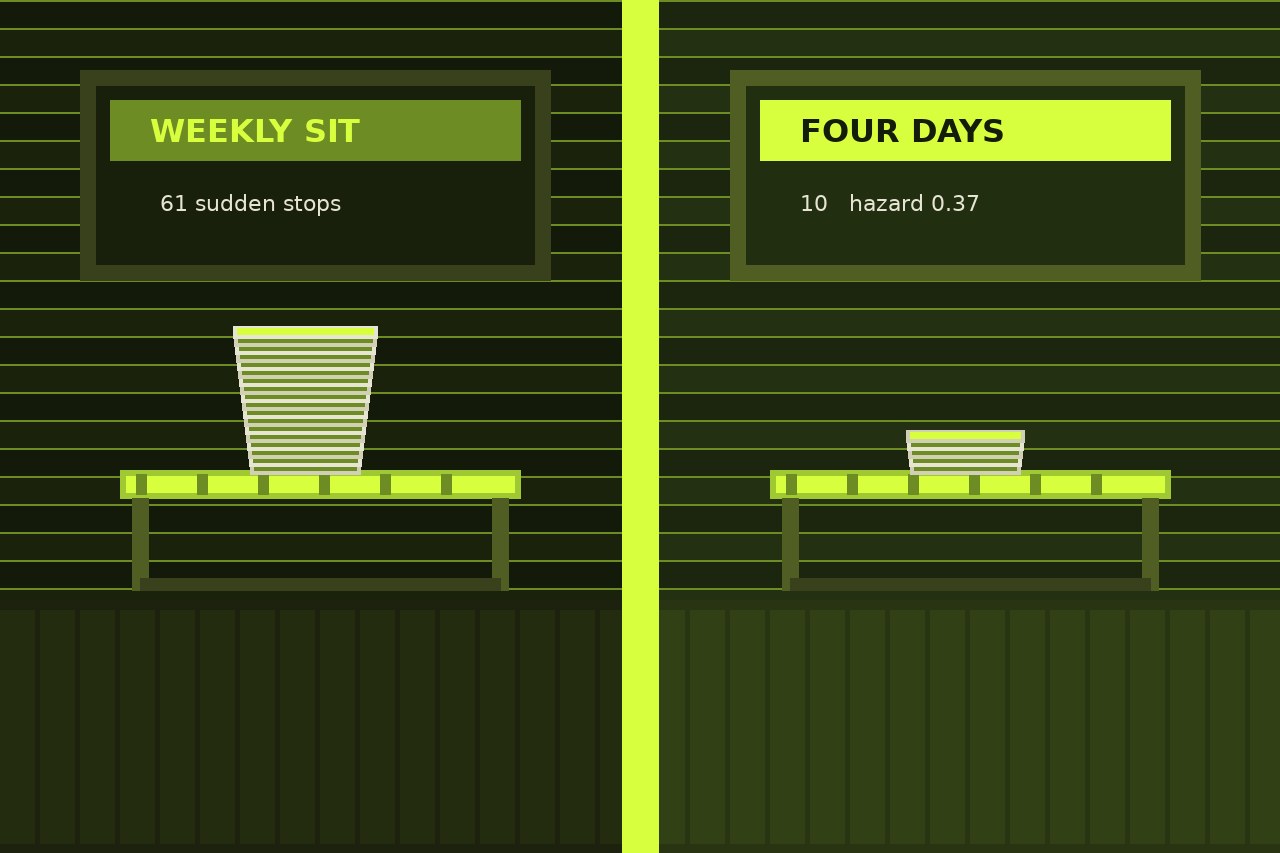
Among the 601 men who went once a week, 61 men died of sudden cardiac death, which is 10.1 percent of that group. Among the 1513 men who went 2 to 3 times a week, 119 men died that way, which is 7.8 percent. Among the 201 men who went 4 to 7 times a week, 10 men died that way, which is 5.0 percent.
A hazard ratio is how often the event happened next to the once-a-week group. After the team accounted for other health facts, the hazard ratio for sudden cardiac death was 0.78 for men who went 2 to 3 times a week, in a range from 0.57 to 1.07. A p value is how often a gap this big would show up if the groups were the same, and that p value was 0.12.
For men who went 4 to 7 times a week, the hazard ratio was 0.37, in a range from 0.18 to 0.75, with a p value of 0.006 and a trend p value of 0.005. The team treated that 4-to-7 gap as real.
For death from coronary heart disease, the hazard ratios were 0.77 and 0.52, with p values of 0.04 and 0.01. For death from any heart or vessel disease, the hazard ratios were 0.73 and 0.50, with p values of 0.002 and 0.001. For death from any cause, the hazard ratios were 0.76 and 0.60, and both p values were under 0.001.
How long should you stay in a sauna?
Men who stayed more than 19 minutes had a sudden cardiac death hazard ratio of 0.48 next to men who stayed a shorter time, in a range from 0.31 to 0.75, and the p value was 0.001.
Your heart can climb to 100 beats a minute in a moderate room, and it can climb to 150 in a hotter room. At 80 to 90 degrees Celsius, people can sweat 0.6 to 1.0 kilograms an hour.
Is it the sauna heat or the rest that helps?
The team watched the men. They did not pick who used the heat how often. Residual confounding means some other habit could still explain part of the gap. They asked the men once, at the start. They counted men only, in Finnish dry saunas.
About 1 to 2 percent of sudden deaths happen within 24 hours of a sauna, and alcohol is a major factor in those deaths.
Rita Redberg wrote the editor's note in the same 2015 issue. She left the why open: the hot room, the rest, the leisure, or the company on the bench. Keep her question next to the counts.
Minna Hannuksela and Shaker Ellahham reviewed how blood moves in a sauna in 2001.
If you feel unusual distress, or if you already have heart disease, talk to a clinician, because this page is educational.
If you want the red light page, open the red light page.
Can you still want the heat you keep going back to?
You wanted the heat you keep going back to, not one Sunday sweat. Keep the sauna name.
Men who used a dry Finnish sauna 4 to 7 times a week had fewer sudden cardiac deaths than men who went once a week. You can still want the heat you keep going back to.
Sources
Laukkanen T., Khan H., Zaccardi F., Laukkanen J.A. “Association Between Sauna Bathing and Fatal Cardiovascular and All-Cause Mortality Events.” JAMA Internal Medicine 2015, 175(4), 542-548. DOI 10.1001/jamainternmed.2014.8187. PMID 25705824. Published online 23 February 2015. University of Eastern Finland, Kuopio. Finnish Kuopio Ischemic Heart Disease Risk Factor Study. Invited 3433 men aged 42 to 60. 2682 participated (78.1%). Complete sauna information 2327. 12 never-users excluded. Analytic n=2315. Baseline 1 March 1984 through 31 December 1989. Follow-up through 2011, no losses. Mean follow-up 18.8 years, median 20.7. Mean age 53.1 SD 5.1, BMI 26.9 SD 3.5. Mean frequency 2.1 SD 1.1 (range 1 to 7), duration 14.2 SD 7.5 minutes, temperature 78.9 C SD 9.6. Dry air humidity 10 to 20 percent, recommended 80 C to 100 C at the face. Frequency 1 per week n=601, 2 to 3 n=1513, 4 to 7 n=201. Events: 190 SCD, 281 fatal CHD, 407 fatal CVD, 929 all-cause. SCD counts 61 (10.1%) once a week, 119 (7.8%) 2-3, 10 (5.0%) 4-7. Multivariable SCD HR 0.78 (0.57-1.07) p=0.12 for 2-3, 0.37 (0.18-0.75) p=0.006 for 4-7, trend p=0.005. CHD 0.77 p=0.04 and 0.52 p=0.01. CVD 0.73 p=0.002 and 0.50 p=0.001. All-cause 0.76 and 0.60, both p under 0.001. Duration SCD 0.48 (0.31-0.75) p=0.001 for over 19 minutes. Heart rate up to 100/min moderate, 150/min intense. Sweat 0.6 to 1.0 kg/h at 80-90 C. 1 to 2 percent of sudden deaths within 24 hours of sauna, alcohol a major factor. Observational, residual confounding, men only, Finnish dry sauna, one baseline questionnaire. doi.org/10.1001/jamainternmed.2014.8187 · pubmed.ncbi.nlm.nih.gov/25705824 · jamanetwork.com/journals/jamainternalmedicine/fullarticle/2130724
Redberg R.F. “Health Benefits of Sauna Bathing.” JAMA Internal Medicine 2015, 175(4), 548. Editor's Note on the Laukkanen file. Names the open why: hot room, rest, leisure, or company on the bench. Neighbor. doi.org/10.1001/jamainternmed.2014.8187
Hannuksela M.L., Ellahham S. “Benefits and risks of sauna bathing.” American Journal of Medicine 2001, 110(2), 118-126. DOI 10.1016/S0002-9343(00)00671-9. The 2015 discussion cites this review for hemodynamic effects. Neighbor. doi.org/10.1016/S0002-9343(00)00671-9