mindfulness · gray matter · hippocampus
Mindfulness increased gray matter in the left hippocampus.
You wanted something physical to move after the class.
Mindfulness, in this class, is paying attention on purpose. MBSR is the eight-week mindfulness class. Gray matter is the tissue the scan scored as denser. Keep the mindfulness name.
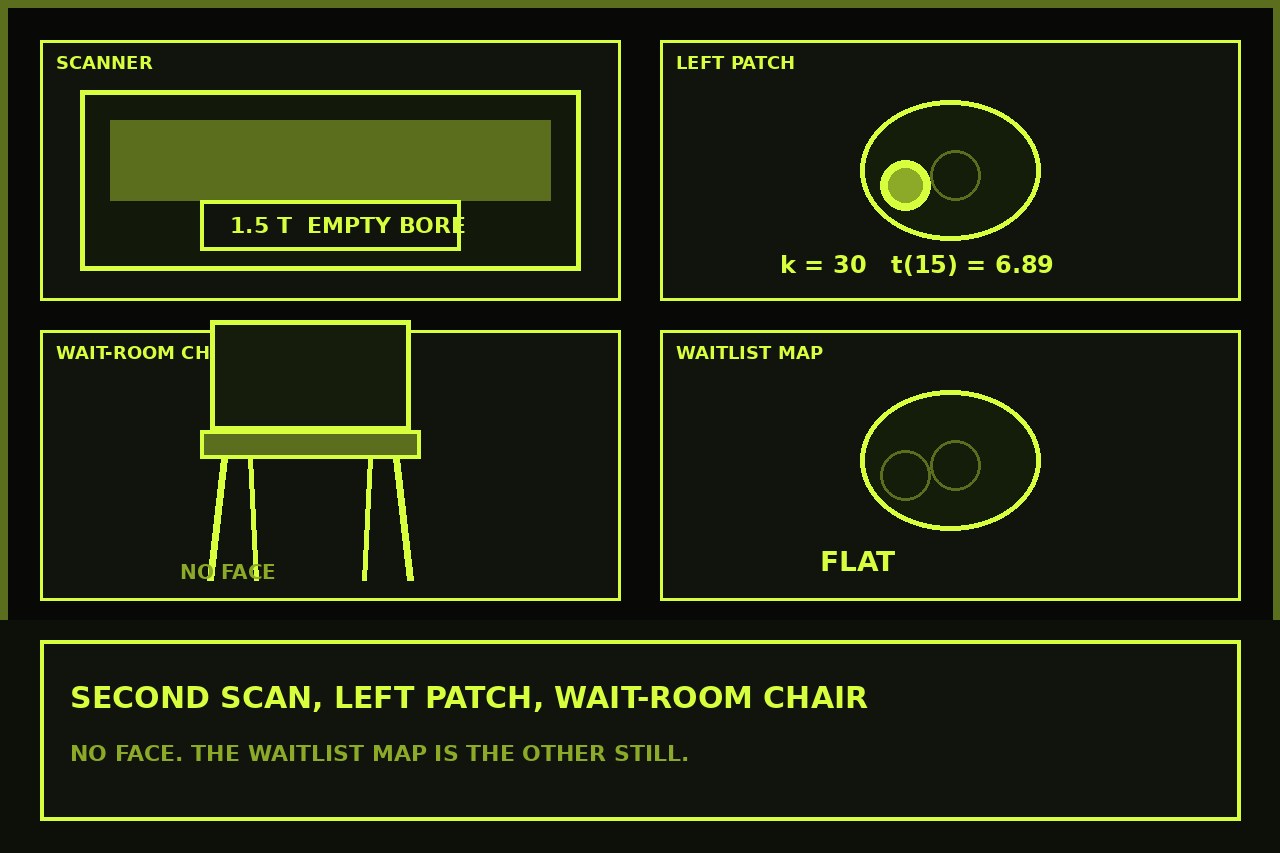
What is mindfulness?
Mindfulness, in this class, is paying attention on purpose. You pick a thing that is here, like your breath or the feel of your feet, and you notice it. When you start thinking about something else, you bring your attention back. People use that word for many quiet habits. This page uses the word the way this class used it.
You wanted something physical to move after those weeks, something you could point at on a scan.
What is MBSR?
MBSR is the eight-week mindfulness class. The letters stand for mindfulness-based stress reduction. Jon Kabat-Zinn wrote the book the class follows, Full Catastrophe Living, in 1990. The Center for Mindfulness at the University of Massachusetts Medical School taught this version.
People meet once a week for 2.5 hours. In week 6 they also spend one 6.5-hour day together. They take home 45-minute tapes and practice there. People who finished the class logged 22.6 hours of formal homework on average, with a spread of 6.3 hours. That is about 27 minutes a day.
What is gray matter?
Gray matter is the tissue the scan scored as denser. A voxel is one tiny cube in the scan. Density is how packed that cube looked. The file measured density on a voxel map.
What is the hippocampus?
The hippocampus is a small part that helps you keep an old worry from feeling like a present emergency. You have one on the left and one on the right. The team watched both. They also watched the insulae. The insula is a fold on each side of the brain. The team looked at that left patch after the class.
Does mindfulness increase gray matter?
Britta Holzel, James Carmody, Mark Vangel, Christina Congleton, Sita Yerramsetti, Tim Gard, and Sara Lazar published this paper in 2011. The journal is Psychiatry Research: Neuroimaging, a medical journal. They worked at Massachusetts General Hospital and Harvard, and with the University of Massachusetts Medical School. They scanned people in Charlestown, the Boston neighborhood with that hospital scanner. You can read the paper at doi.org/10.1016/j.pscychresns.2010.08.006.
The title of the paper is “Mindfulness practice leads to increases in regional brain gray matter density.”
Eighteen people started the class. Two people left after the first scan felt uncomfortable. The team then counted 16 people who finished. Their average age was 38.0, with a spread of 4.1. Seventeen people waited and did not take the class yet. That waitlist is the comparison group, and their average age was 39.0, with a spread of 9.2. The people in both groups were healthy.
The team used a Siemens Magnetom Avanto 1.5 T scanner. Tesla is how strong the magnet is. They scored the pictures with SPM5, which is the software, and with voxel-based morphometry, which is a way to score each tiny cube. They picked the hippocampi and the insulae first, on purpose. Those first spots are the regions of interest.
Before the class, both groups looked the same on that left hippocampus patch. That test had a t of 0.06 and a p value of 0.956. A t score compares two groups. A p value tells you how often a gap this big would show up if the groups were the same.
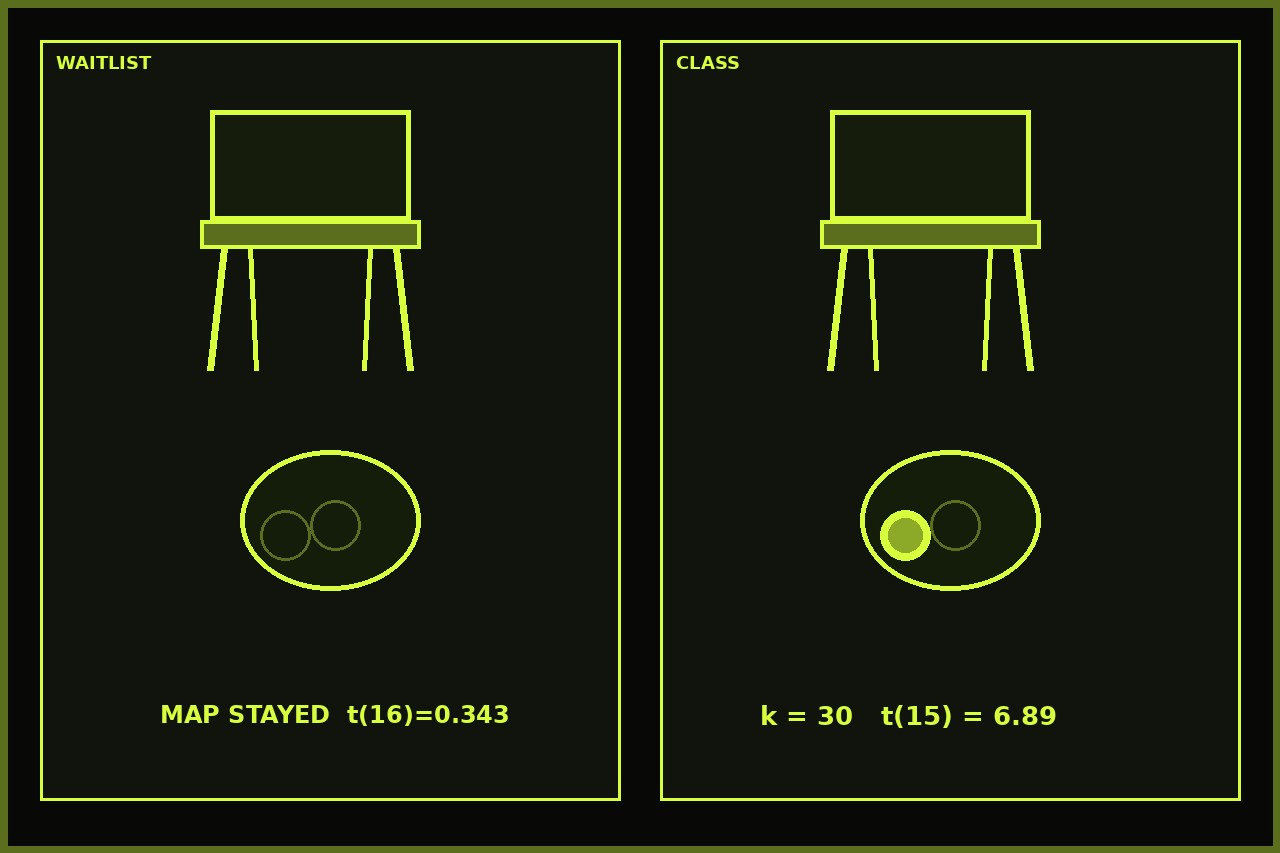
After the eight weeks, people who finished the class showed more gray-matter density in a small left hippocampus patch. The team marked the peak cube at map address minus 36, minus 34, minus 8 on a shared brain map called MNI. The t score was 6.89. The voxel p value was 0.014 after a strict FWE check. Researchers use FWE so a random cube is less likely to count as a real change. The team counted 30 cubes in that patch.
The team compared how the two groups changed over time. That test had an F of 4.92 and a p value of 0.035. An F score compares how two groups change together.
Did the waitlist group change?
A waitlist is people who waited and did not take the class yet. Those people did not show the same left hippocampus change. The team compared each waitlist person's first scan with their second scan. That test had a t of 0.343 and a p value of 0.736. The waitlist scan stayed put.
The team also looked at the whole brain. They saw more gray-matter density in the posterior cingulate cortex, a strip toward the back middle. They saw it in the temporo-parietal junction, where the side and the back meet. They saw it in the cerebellum, the part at the back bottom that helps you keep balance and time. The team did not treat an insula change as real.
The team did not hide who took the class, so everyone knew. They said the class also has group time, stretching, and teaching in the same weeks. Keep those facts next to the scan.
Does more homework mean more gray matter?
The team did not find homework minutes lining up with how much gray-matter density changed. They also did not find FFMQ change lining up with that gray-matter change. The FFMQ is a mindfulness questionnaire from Ruth Baer in 2006. People who took the class still showed the left hippocampus patch.
Holzel also wrote a 2010 paper on the amygdala in people from this same kind of class. The amygdala is a nearby part of the brain.
If you feel unusual distress, talk to a clinician, because this page is educational.
If you want the lion's mane page, open the lion's mane page.
Can you still want something physical to move after the class?
You wanted something physical to move after the class. Keep the mindfulness name.
The class scan showed more gray-matter density in a small left hippocampus patch. The waitlist scan stayed put. You can still want something physical to move after the class.
Sources
Holzel B.K., Carmody J., Vangel M., Congleton C., Yerramsetti S.M., Gard T., Lazar S.W. “Mindfulness practice leads to increases in regional brain gray matter density.” Psychiatry Research: Neuroimaging 2011, 191(1), 36-43. DOI 10.1016/j.pscychresns.2010.08.006. PMID 21071182. PMC 3004979. Massachusetts General Hospital / Harvard. University of Massachusetts Medical School. Center for Mindfulness, UMass. Charlestown scanner. n=16 MBSR completers after 18 enrolled (2 dropped after first-scan discomfort). Mean age 38.0 SD 4.1. Waitlist n=17, mean age 39.0 SD 9.2. 8 weekly meetings 2.5 hours plus one 6.5-hour day in week 6. 45-minute home tapes. Formal homework mean 22.6 hours SD 6.3, about 27 min/day. Siemens Magnetom Avanto 1.5 T. SPM5 VBM. ROI bilateral hippocampi and insulae. Left hippocampus peak MNI -36, -34, -8, t(15)=6.89, voxel p=0.014 FWE, k=30. Group x time F(1,29)=4.92 p=0.035. Pre even t(31)=0.06 p=0.956. Control paired t(16)=0.343 p=0.736. Insula ns. Whole-brain also PCC, TPJ, cerebellum. Homework and FFMQ change not correlated with gray-matter change. Waitlist control, unblinded, group/stretch/education confound named. Healthy sample. Curriculum: Kabat-Zinn J. Full Catastrophe Living 1990. Neighbor: Holzel 2010 amygdala. FFMQ: Baer 2006. doi.org/10.1016/j.pscychresns.2010.08.006 · pubmed.ncbi.nlm.nih.gov/21071182 · PMC3004979
Holzel B.K., et al. “Stress reduction correlates with structural changes in the amygdala.” Social Cognitive and Affective Neuroscience 2010, 5(1), 11-17. DOI 10.1093/scan/nsp034. Neighbor only. doi.org/10.1093/scan/nsp034
Baer R.A., et al. “Using self-report assessment methods to explore facets of mindfulness.” Assessment 2006, 13(1), 27-45. DOI 10.1177/1073191105283504. FFMQ neighbor. doi.org/10.1177/1073191105283504