Name it to tame it · affect labeling · angry
Naming the feeling quieted the amygdala.
You wanted the feeling word to quiet the alarm after a name already sat on the card.
Affect labeling, also called name it to tame it, is when you pick a feeling word like angry or scared for a face. The amygdala is the alarm region in the brain. A gender-label, also called a name, is when you pick a name matched for length and first letter. RVLPFC is a region on the right side of the forehead that went up. BA47 is the map number for that region. MPFC is a middle front region. Fixation is looking at a plus sign. Observe is just looking at the face. 3-T is the strength of the scanner. d tells you how big the change was. r tells you how the two numbers moved together. RT is how fast they pressed the button. Keep the name-it-to-tame-it name.
What is affect labeling?
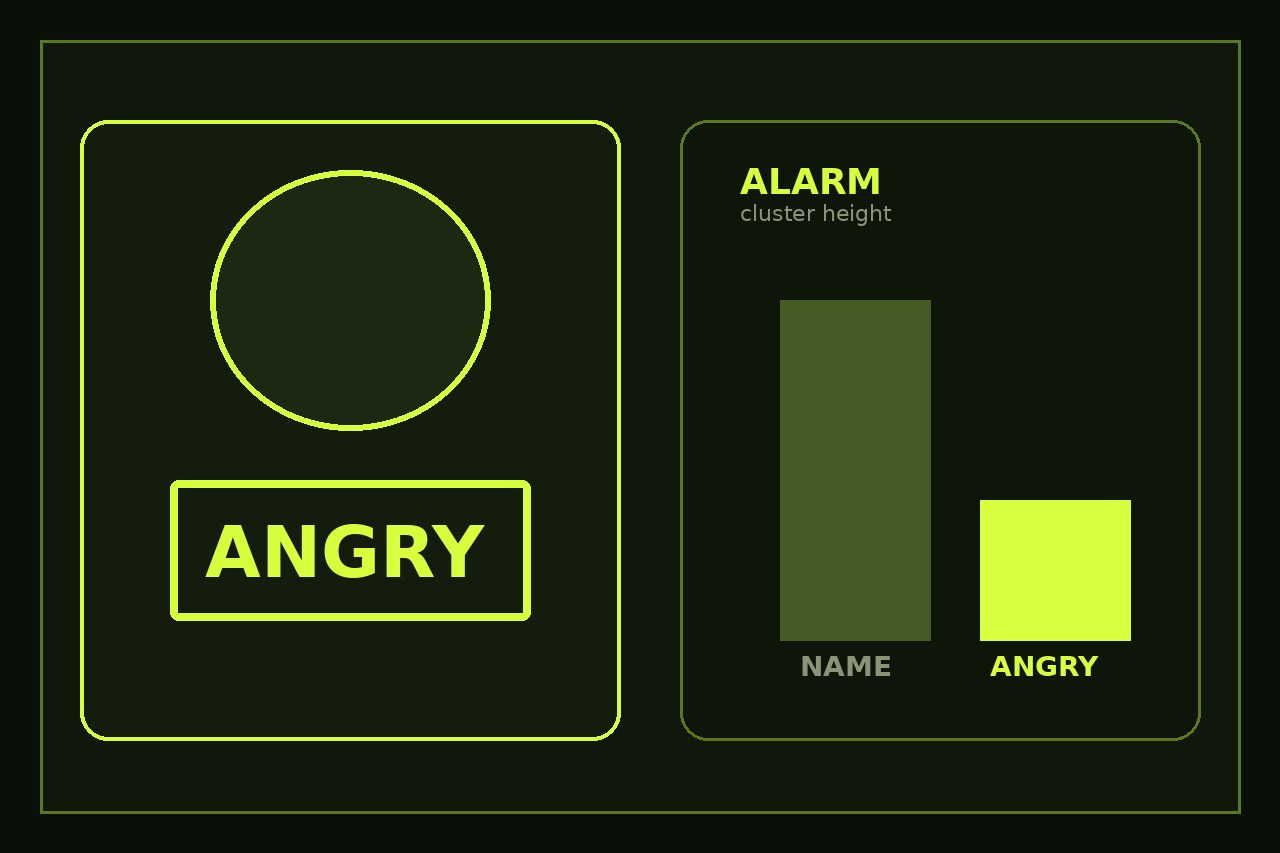
Affect labeling is when you pick a feeling word like angry or scared for a face. You look at the face. Then you pick the word that names the feeling.
You wanted that feeling word to quiet the alarm after a name already sat on the card, so keep the name-it-to-tame-it name.
What is name it to tame it?
Name it to tame it is the same move as affect labeling. You pick a feeling word for the face in front of you. The feeling words in this study were scared or angry.
Keep wanting the feeling word to quiet the alarm. People still picked a name in this study.
What does the amygdala do?
The amygdala is the alarm region in the brain. The team watched the left side of that alarm region while people picked a word.
You came here wanting a quieter left amygdala. Keep the feeling word for that change.
How do you pick a gender-label?
A gender-label is when you pick a name matched for length and first letter. You still look at a face. Then you pick a name instead of angry or scared.
People who picked a name still made a real pick. Keep that name as the other word. Keep wanting the feeling word to quiet the alarm.
Did naming the feeling quiet the amygdala?
Lieberman, with Eisenberger and the UCLA team, published this paper in 2007 in Psychological Science. They ran the work at UCLA. You can read the paper at doi.org/10.1111/j.1467-9280.2007.01916.x.
The title of the paper is “Putting feelings into words: Affect labeling disrupts amygdala activity in response to affective stimuli.” It also carries DOI 10.1111/j.1467-9280.2007.01916.x and PMID 17576282.
They enrolled 30 people. 18 were female. Ages ran from 18 to 36. They used a Siemens Allegra scanner. 3-T is the strength of that scanner.
People saw a face and picked a feeling word, angry or scared, or they picked a name matched for length and first letter. People who picked angry or scared showed a quieter left amygdala than people who picked a name. That gap was t(29)=2.14, and d was 0.79. d tells you how big the change was.
Keep wanting the feeling word to quiet the alarm.
Were names faster than feeling words?
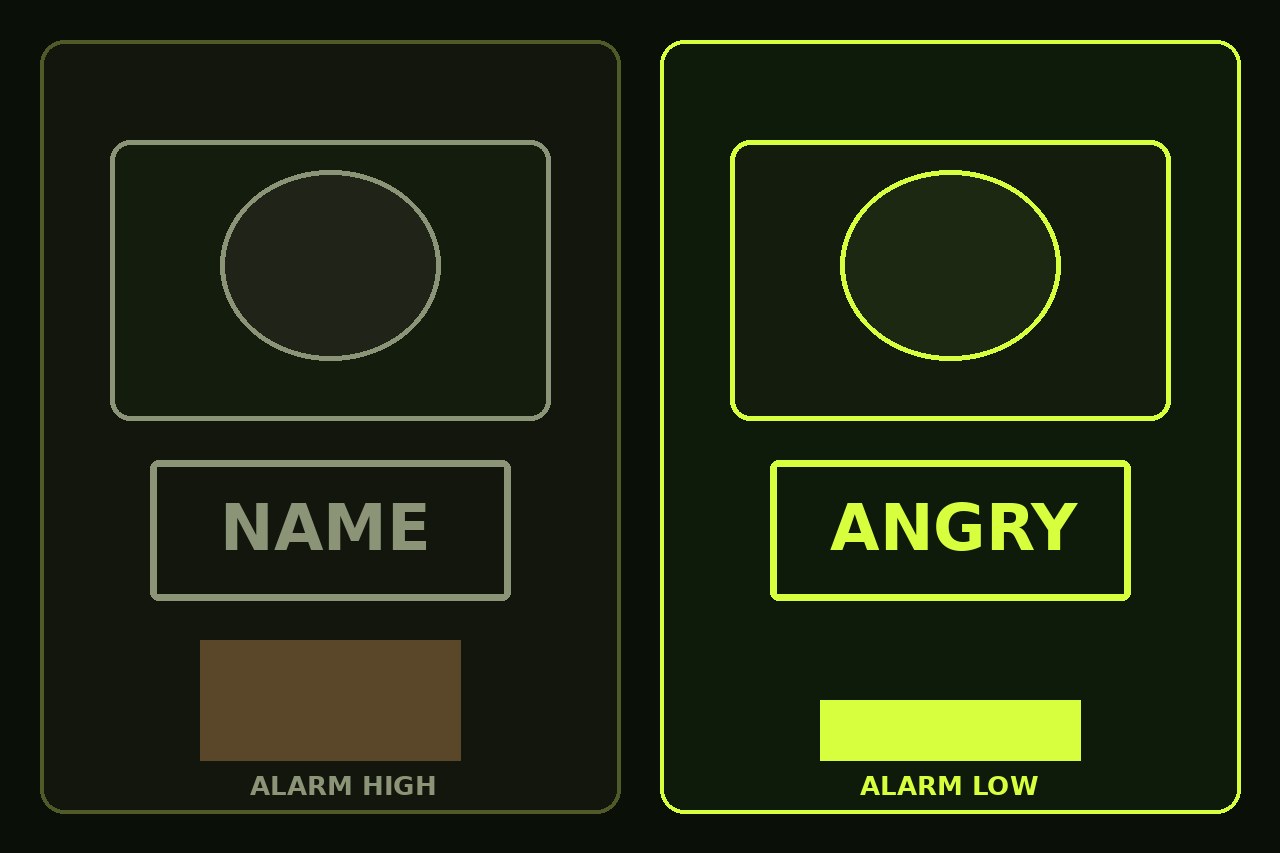
People who picked a name pressed the button faster. That speed gap was t(29)=3.20, and d was 1.19. RT is how fast they pressed the button.
After the team counted that speed, the quieter left amygdala still held, t(29)=2.07, and d was 0.77. Names were faster. People who picked angry or scared still showed the quieter alarm. You can still want the feeling word to quiet the alarm.
What happened when people just looked at a face?
Observe is just looking at the face. Fixation is looking at a plus sign. People who just looked at the face showed more left-amygdala activity than people who looked at a plus sign, t(29)=4.30, and d was 1.60.
People who picked a feeling word showed a quieter left amygdala than people who just looked, t(29)=3.28, and d was 1.22. People who picked the feeling word still showed the quieter alarm after they only looked at the face. Keep wanting the feeling word to quiet the alarm.
How did the right forehead region move?
RVLPFC is a region on the right side of the forehead that went up. People showed a rise in only that region. BA47 is the map number for that region, and the printed spot was 54, 24, 10.
r tells you how the two numbers moved together. The inverse r was .51, so when people showed a rise in the forehead region, they showed a drop in the alarm region. MPFC is a middle front region. The team printed MPFC mediation.
If you feel unusual distress or you need care, talk to a clinician, because this page is educational and not a diagnosis.
If you want a page about a walk that printed 81 percent more ideas than sitting, open the walking page.
Can you still want the feeling word to quiet the alarm?
You wanted the feeling word to quiet the alarm after a name already sat on the card. Keep the name-it-to-tame-it name.
People who picked angry or scared showed a quieter left amygdala than people who picked a name, d=0.79. Names were faster. You can still want the feeling word to quiet the alarm.
Sources
Lieberman M.D., Eisenberger N.I., Crockett M.J., Tom S.M., Pfeifer J.H., Way B.M. “Putting feelings into words: Affect labeling disrupts amygdala activity in response to affective stimuli.” Psychological Science 2007;18(5):421-428. DOI 10.1111/j.1467-9280.2007.01916.x. PMID 17576282. UCLA. n=30, 18 female, ages 18-36. Siemens Allegra 3-T. Affect-label vs gender-label on left amygdala t(29)=2.14, d=0.79. Feeling words scared or angry. Names matched for length and first letter. Names faster t(29)=3.20, d=1.19. After RT the gap held t(29)=2.07, d=0.77. Observe vs fixation t(29)=4.30, d=1.60. Affect-label vs observe t(29)=3.28, d=1.22. RVLPFC only region up, BA47 54,24,10. Inverse r=.51. MPFC mediation. doi.org/10.1111/j.1467-9280.2007.01916.x · pubmed.ncbi.nlm.nih.gov/17576282 · UCLA SAN lab PDF