Thought suppression · white bear · rebound
Trying not to think of a white bear made it come back.
You wanted the ban to keep the bear out after five minutes of talking.
Thought suppression is when you try not to think of something, and rebound is when the picture comes back more after you lift the ban. A stream of consciousness is when you speak every thought out loud. Invite, also called expression, is when they were told they can think of the bear. Focused distraction is when you pick one other thing to think about. An ironic process is the watch that looks for the banned thought. A tally, also called tokens, is each time they rang the bell or said the bear. A Volkswagen is the red car stand-in in Experiment 2. JPSP is the journal, and Trinity is the school. Keep the rebound name.
What is thought suppression?
Thought suppression is when you try not to think of something. You pick a picture you do not want in the room, then you try to keep that picture out.
People already do this when they push a thought away because they want a quiet minute. You wanted the ban to keep the bear out after five minutes of talking, so keep the rebound name.
What is a rebound?
A rebound is when the picture comes back more after you lift the ban. You try not to think of it for a stretch, then you drop the rule, and you see the picture more than you did while you were holding the ban.
You can still want to know that picture comes back. Keep wanting the ban to keep the bear out after those five minutes of talking.
What is the white bear experiment?
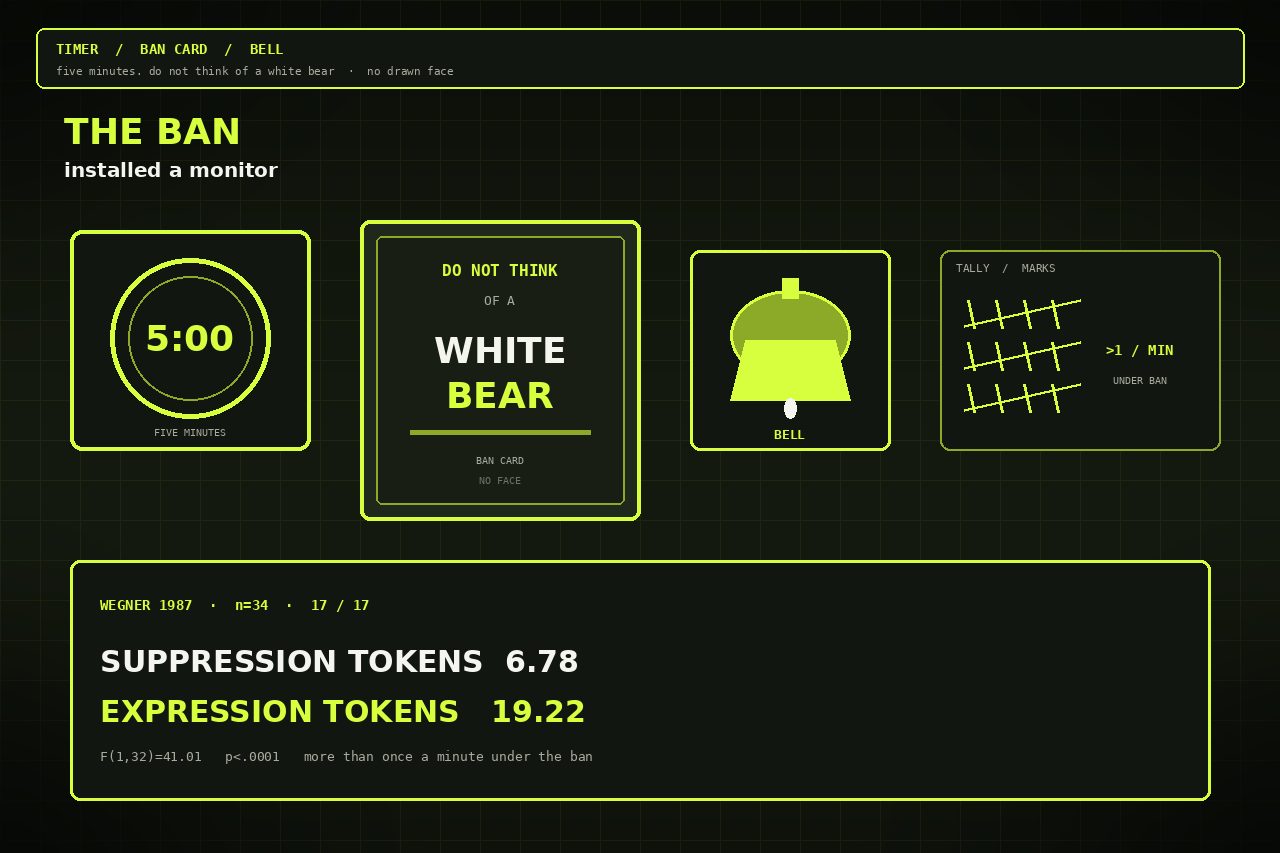
The white bear experiment is a five-minute talk test. People sat and spoke every thought out loud, and that talk is a stream of consciousness. They rang a bell if a white bear showed up in the talk. A tally is each time they rang the bell or said the bear.
Some people were told not to think of a white bear. Other people were told they can think of the bear. That second group is the invite, also called expression. Both groups talked for five minutes. Then the people who had held the ban were told they can think of the bear, and they talked for five more minutes.
You wanted that ban to keep the bear out after those five minutes, so keep the rebound name.
Did trying not to think of a white bear make it come back?
Wegner, with Schneider, Carter, and White, published this paper in 1987 in JPSP. JPSP is the journal. They ran the work at Trinity, which is the school. You can read the paper at doi.org/10.1037/0022-3514.53.1.5.
The title of the paper is “Paradoxical effects of thought suppression.” It also carries DOI 10.1037/0022-3514.53.1.5 and PMID 3612492.
They enrolled 34 people, with 17 people in each arm. An arm is one group in the test.
People who were told not to think of a white bear printed 6.78 during the ban. After they lifted the ban and were told they can think of the bear, those same people printed 19.22. The test they printed for that gap was F(1,32)=41.01, and the p value was under .0001. A p value tells you how often a gap this big would show up if the ban and the invite were the same.
People who first tried not to think of the bear, then were told they can think of it, said the bear more than people who were told they can think of it from the start.
Keep wanting to know whether that picture comes back.
What is focused distraction?
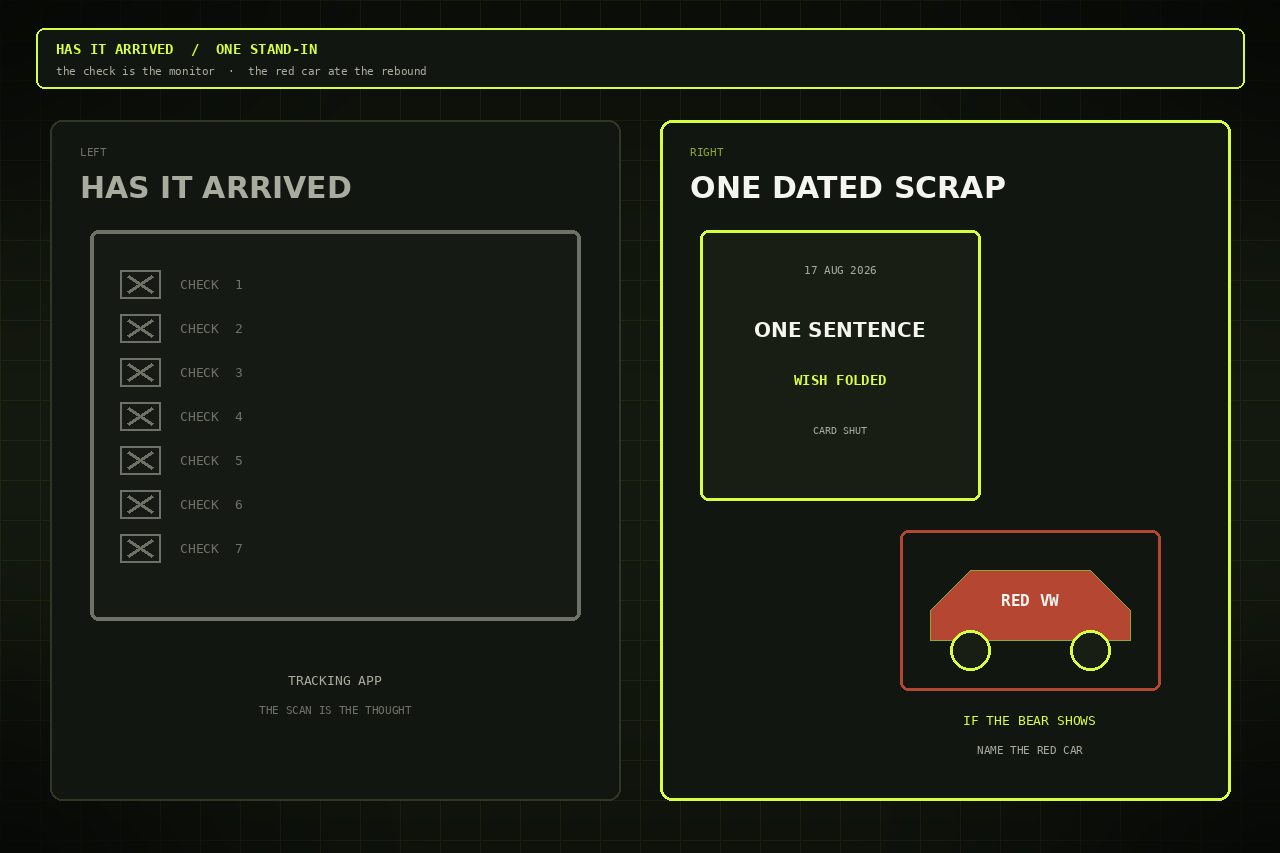
Focused distraction is when you pick one other thing to think about. In Experiment 2 they used a red Volkswagen as the stand-in. A Volkswagen is the red car stand-in in Experiment 2, and they enrolled 49 people.
People who picked one other thing to think about printed a smaller rebound. Focused distraction shrank the rebound, and you can still try not to think of the picture if that is the move you already make. You can still want the ban to keep the bear out.
What is an ironic process?
An ironic process is the watch that looks for the banned thought. While you try not to think of the bear, you also watch for the bear so you can push it away. You keep the picture nearby because you keep looking for it.
Keep the rebound name if you came here to see whether the banned picture comes back after you lift the ban.
If you feel unusual distress or you need care, talk to a clinician, because this page is educational and not a diagnosis.
If you want a page about a thank-you text that beat a five-item list, open the gratitude page.
Can you still want to know the picture comes back?
You wanted the ban to keep the bear out after those five minutes of talking. Keep the rebound name.
People who were told not to think of a white bear printed 6.78 during the ban and 19.22 after the ban lifted. Focused distraction shrank the rebound. You can still want to know the picture comes back.
Sources
Wegner D.M., Schneider D.J., Carter S.R. III, White T.L. “Paradoxical effects of thought suppression.” JPSP 1987;53(1):5-13. DOI 10.1037/0022-3514.53.1.5. PMID 3612492. Trinity. n=34, 17 per arm. Five-minute stream, ban vs invite, ring the bell. Summed tokens suppression 6.78 vs expression 19.22. F(1,32)=41.01, p under .0001. After the ban, people who had held the ban printed more. Ban-first expression above invite-first. Experiment 2 red Volkswagen n=49. Focused distraction shrank the rebound. Ironic process. Abramowitz 2001 and Magee 2012 are later different work. doi.org/10.1037/0022-3514.53.1.5 · pubmed.ncbi.nlm.nih.gov/3612492